

What Does It Mean to Be a Fire Tiger in the Chinese Zodiac?
Were you born in a Fire Tiger year? Check the birth dates, then see how Chinese zodiac tradition describes its personality in relationships and at work.

–6 min read
What Does It Mean to Be a Fire Tiger in the Chinese Zodiac?
Were you born in a Fire Tiger year? Check the birth dates, then see how Chinese zodiac tradition describes its personality in relationships and at work.
–6 min read
You might know you're a Tiger and still wonder what the extra word "Fire" means. A Fire Tiger in the Chinese zodiac is someone born in a Tiger year paired with the Fire element. These years begin at Chinese New Year, so the month and day of your birth matter too.
Which Birth Dates Fall in a Fire Tiger Year?
1986 is one of the Fire Tiger years, but the year number alone can be misleading for a January or February birthday. Zodiac years begin at Chinese New Year, so the Fire Tiger year that started in 1986 continued into early 1987. The Hong Kong Observatory's published calendars give the full Gregorian date ranges below, along with the earlier 1926 cycle and the next one in 2046:
| Fire Tiger year beginning in | First day (Gregorian) | Last day (Gregorian) |
|---|---|---|
| 1926 | February 13, 1926 | February 1, 1927 |
| 1986 | February 9, 1986 | January 28, 1987 |
| 2046 | February 6, 2046 | January 25, 2047 |
The 1986 range includes birthdays through January 28, 1987, while a January 1986 birthday falls before it begins. That is how two people born in different Gregorian years can belong to the same Fire Tiger year. It also explains why the month and day matter when you look up your sign.
The rows are 60 years apart because that is how often the Fire Tiger combination returns. Queen Elizabeth II's April 21, 1926 birthday makes her a Fire Tiger from the earlier cycle, sharing the same zodiac name as Fire Tigers born in 1986.
Tiger years in between those cycles carry other elements. The Tiger year that began in 1998, for example, was an Earth Tiger year. Fire can appear with other animals, too: Chinese New Year in 2026 began a Fire Horse year. The word "Fire" adds something specific to your Tiger birth year: it identifies the element paired with the animal.
What Does Fire Tiger Mean in Chinese Astrology?
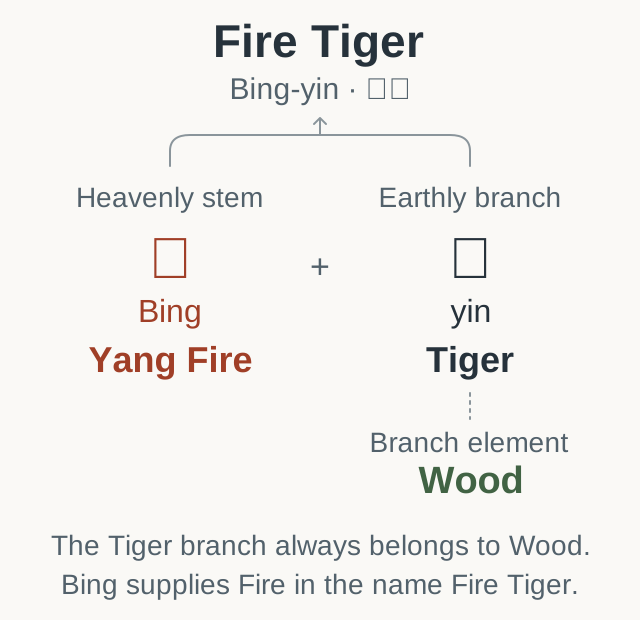
Fire comes from the first part of the traditional year name Bing-yin (丙寅). Bing, the Heavenly Stem, identifies the year's element as Yang Fire. The second part, yin, is the Earthly Branch associated with the Tiger. Together they give us Fire Tiger.
Both parts change as the calendar advances. There are ten stems and twelve branches, and each list moves forward one place every year. The Tiger branch comes round after twelve years, paired with a different stem. Both sequences return to their starting positions together after sixty years, bringing Bing-yin back.
That changing stem also separates Metal and Wood Tigers from Fire Tigers. The Tiger years beginning in 1950 and 2010 are Geng-yin, with Metal as their stem element; those beginning in 1974 and 2034 are Jia-yin, with Wood. The yin part stays the same in each name, keeping the Tiger while the stem changes the element. Traditional portraits give the combinations different emphases, often describing Wood Tigers as cooperative and Metal Tigers as determined.
Wood in Wood Tiger is the year's stem element, but Wood also appears elsewhere in Chinese five-element correspondences: it is the Tiger branch's fixed element. That association stays the same across Tiger years, while the year's stem changes. This is how a Fire Tiger can have Fire in the year name and still be linked to Wood in a table of fixed animal associations. Fire Tiger personality descriptions use the year's Fire element to add a particular emphasis to the broader Tiger portrait.
What Are Fire Tigers Like?
Fire Tigers are often portrayed as energetic and optimistic, eager to turn an interesting idea into something they can actually do. Fire brings a more expressive quality to the broader Tiger portrait, so that eagerness is easy for others to notice. You might recognise it in a friend who suggests trying a new weekend activity and soon has everyone keen to join.
Getting everyone excited and giving everyone time to decide are different things, though. In the same example, the person ready to book may be frustrated that others still have questions about the cost or the plan. This is where the familiar description of a Fire Tiger as impulsive becomes easier to understand: enthusiasm can run ahead of the details. Waiting can feel like losing momentum.
The next challenge comes after the novelty wears off. Trying a new activity once can be exciting; returning to it through weeks of slow progress asks for patience. Traditional accounts often pair the Fire Tiger's strong beginnings with difficulty sustaining that interest.
These descriptions also emphasise independence: wanting to decide what to do and how to do it. In our weekend example, the friend who eagerly organises the outing might be reluctant to change the activity when someone suggests another option. They have brought everyone together, yet insisting on their original idea can leave the others feeling that they have little say.
Who Is a Fire Tiger Compatible With?
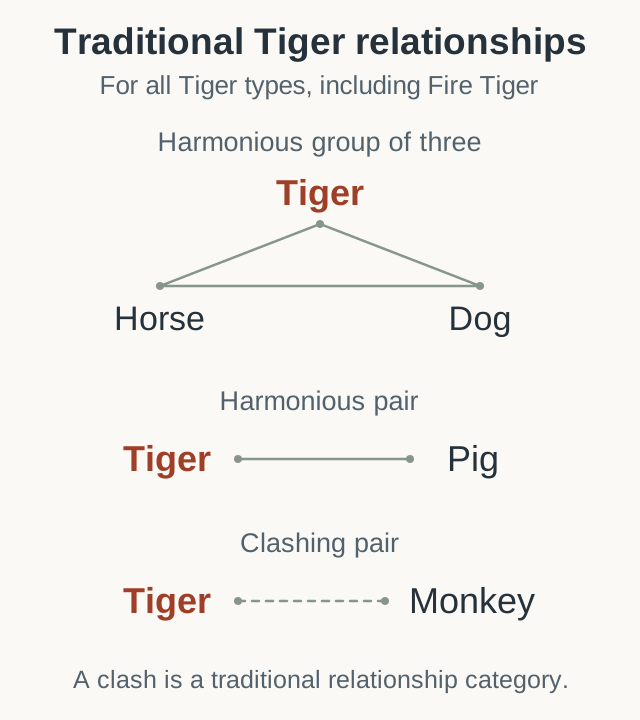
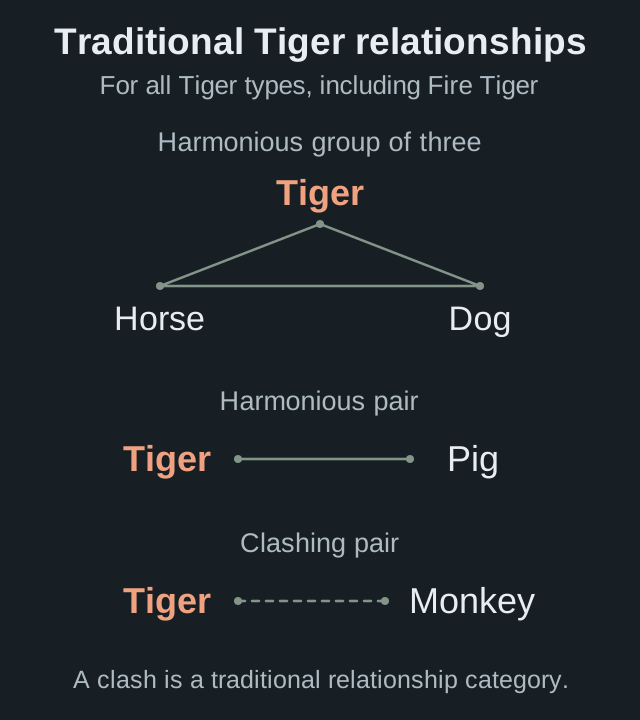
Horse, Dog and Pig are the signs commonly named as good matches for a Fire Tiger in traditional zodiac guides. These pairings follow the Tiger's animal sign, so they are shared with other types of Tiger.
The list brings together two kinds of traditional grouping. Tiger, Horse and Dog form one harmonious three-sign group, while Tiger and Pig form a harmonious pair. For more on these groupings, see this overview of zodiac compatibility.
The Monkey is listed differently: it is the Tiger's traditional clash sign. This is the pairing often meant by the Tiger's "enemy" in zodiac searches. The term points to expected friction within the tradition, rather than a verdict on a particular friendship or marriage.
Fire adds to the picture of how someone relates to a partner, rather than changing the animal matches. The traditional emphasis on warmth and expression might appear as readily showing affection or initiating shared plans. Those gestures can sit alongside a wish to keep time for interests of their own.
For example, one partner might want to spend every evening together, while the other wants to keep a weekly class or time with friends. Agreeing which evenings to share and which to keep free gives both people a say in their time together. Their shared plans can then include both time as a couple and time each person has chosen for themselves.
What Are Fire Tigers Like at Work?
At work, the traditional Fire Tiger portrait often centres on getting an idea moving. The enthusiasm described earlier might show up in someone who proposes a new approach, explains why it is worth trying and volunteers to make a start. In a small team preparing a presentation, that could be the colleague who suggests opening with a demonstration and offers to put together the first version.
As they put that first version together, they may enjoy deciding for themselves how the demonstration works. Colleagues might then suggest a shorter opening or a clearer example. Those changes can be harder to welcome when someone is keen to develop an idea in their own way. Explaining their choices and listening to those suggestions are part of turning an individual idea into shared work.
Once the idea has been agreed, a different kind of effort takes over. The demonstration needs checking, the wording needs editing and the team needs to practise together. A new idea may already seem more appealing than another run-through. This is the persistence challenge in the traditional description: staying with the task when it no longer feels new. Finishing it means carrying that first burst of interest through the revisions and the final rehearsal.
That eagerness to begin, along with the effort of following through, may remind you of someone you know, perhaps even yourself. The name identifies a place in the Chinese calendar and carries a traditional interpretation of personality. Your own experiences give those descriptions their detail: the enthusiasm you share, the choices you value and the people you make plans with. Those connections can make a birth-year name a way to understand yourself or someone close to you.
Written by
Richie Shi
I’m Richie. I help foreigners solve problems related to China. Feel free to reach out directly.
Recommended articles
All guidesHow to Book Hotels in China as a Foreigner: 2026 GuideCompare Trip.com, Agoda, Booking.com, Expedia and local hotel apps, then avoid issues with foreign guest policies, passports, credit cards and deposits.Richie Shi China SIM Card, eSIM or Roaming? 2026 Guide for ForeignersCompare China SIM cards, eSIMs, and roaming in 2026, with airport vs city buying tips, carrier choices, passport rules, and VPN advice.Richie Shi
 How to Book China High-Speed Rail Tickets in 2026Book China high-speed rail tickets as a foreigner with passport tips, Trip.com vs 12306, 15-day sales, reservations, payment options, and boarding steps.Richie Shi
China SIM Card, eSIM or Roaming? 2026 Guide for ForeignersCompare China SIM cards, eSIMs, and roaming in 2026, with airport vs city buying tips, carrier choices, passport rules, and VPN advice.Richie ShiHow to Book China High-Speed Rail Tickets in 2026Book China high-speed rail tickets as a foreigner with passport tips, Trip.com vs 12306, 15-day sales, reservations, payment options, and boarding steps.Richie Shi