

The 5 Elements: Meanings and Symbols Across Cultures
Explore the 5 elements in Chinese, Western, and Indian traditions. Learn their meanings and symbols, and why some lists have four elements instead of five.

–8 min read
The 5 Elements: Meanings and Symbols Across Cultures
Explore the 5 elements in Chinese, Western, and Indian traditions. Learn their meanings and symbols, and why some lists have four elements instead of five.
–8 min read
What Are the 5 Elements of Nature?
The 5 elements in Chinese philosophy are wood, fire, earth, metal and water. Ayurveda uses earth, water, fire, air and space. Western traditions often use earth, water, air and fire, sometimes with a fifth element.
| Tradition | Elements | What the elements describe |
|---|---|---|
| Chinese wuxing | Wood, fire, earth, metal, water | Five phases of change |
| Indian five great elements, including Ayurveda | Earth, water, fire, air, space (akasha) | Traditional categories for nature and the body |
| Greek four-element tradition | Earth, water, air, fire | Basic constituents of the natural world |
| Aristotle's cosmology | Earth, water, air, fire, aether | Aether belongs to the heavens |
| Some modern Western spiritual systems | Earth, water, air, fire, spirit | Spirit as a connecting life force |
The lists differ because they come from different explanations of nature. Wuxing, often translated as "five phases," focuses on change and relationships; the Greek four elements describe what things are made of.
Here, "elements" means the categories a tradition uses to explain nature. A list that includes wood or spirit is describing that tradition's view of the world, rather than naming chemical elements from the periodic table.
The Five Elements in Chinese Philosophy
In wuxing, each element takes its meaning from what it does in nature. The Internet Encyclopedia of Philosophy describes early accounts through actions such as bending, burning and flowing. These help explain what “five phases” means in practice.
If you're familiar with the Western four-element list, you may notice that air is missing from wuxing. The difference comes from what the categories describe: the Western elements are basic constituents of nature, while the five Chinese phases describe patterns of activity and change.
Wood
Wood (木, mu) is associated with growth and the ability to bend and straighten. A tree extending its branches shows growth; a branch flexing in the wind shows how wood can bend without breaking.
Fire
Fire (火, huo) burns and rises. The heat of a burning fire and the upward movement of its flames give us a concrete picture of this phase.
Earth
Earth (土, tu) means soil here. It receives seeds and supports the crops that grow from them.
Metal
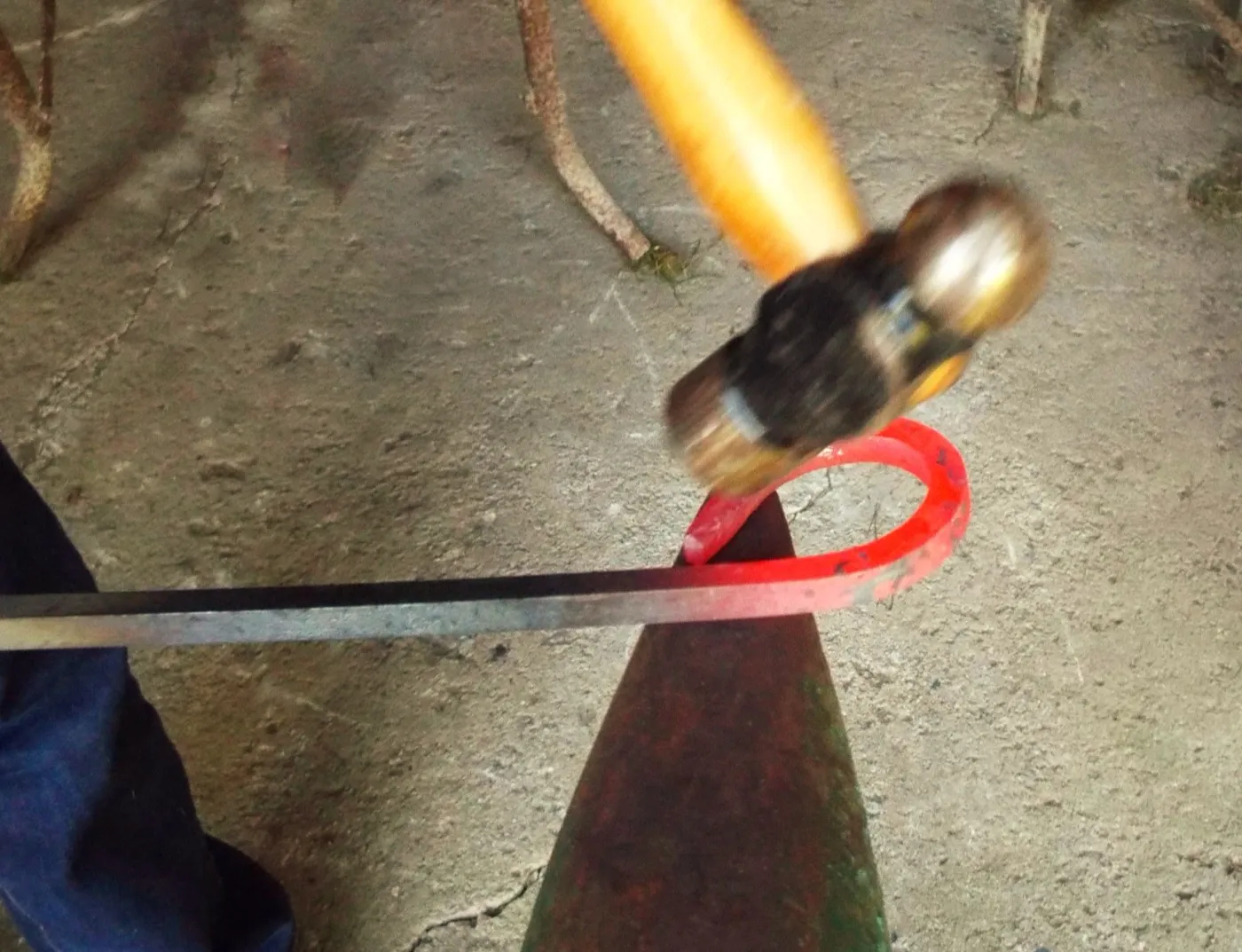
Metal (金, jin) is described in early accounts as yielding and changing form. The blacksmith in the photograph below works heated iron into a curved shape, giving us a concrete example of this quality.
.jpg)
Water
Water (水, shui) moistens and moves downward. Rain soaking into soil or water flowing downhill shows both qualities. Its meaning comes from these observable actions, which give water a different role from fire's burning and rising.
How the five phases relate
The phases also affect one another. In the generating relationship, called xiangsheng, one phase helps another arise: wood feeds fire, as fuel does a flame.
The controlling relationship, xiangke, describes one phase restraining another. Water controlling fire is an example we can picture through extinguishing a flame.
Generating describes how one phase supports another, while controlling describes how it limits another. Both belong to a traditional explanation of change, rather than a sequence of chemical reactions.
The Western Elements and Their Meanings
The classical elements in the Western four-element tradition are earth, water, air and fire. Modern spiritual writing also draws symbolic meanings from their natural qualities. These associations vary by tradition.
Earth
A stone or the firm ground beneath our feet gives earth its familiar associations with solidity and support. Symbolically, these qualities become stability and groundedness: a sense of being settled and secure.
Water
Water flows around obstacles and takes the shape of a container. In symbolic readings, this movement offers an image for emotions that shift and for adapting to new circumstances.
Air
We feel air in a breeze or a breath, even though it has no fixed shape. In spiritual writing, air often stands for thought, creativity and inspiration. The movement of air offers an image for ideas arriving or taking a new direction.
Fire
A flame gives off heat and light, and burning turns wood into ash. That visible change makes fire an image of transformation in symbolic readings. Its intensity also lends itself to associations with action and motivation.
Spirit in modern spiritual traditions
Some modern spiritual accounts add spirit as a fifth element. In Melani Schweder's explanation, it is the life force that animates the other elements and connects people with the wider universe.
The Five Elements of Ayurveda
Ayurveda, a traditional Indian system of medicine, uses earth, water, fire, air and space as the five great elements, called Panchamahabhutas. This five-element framework also appears in Hindu thought, though Indian traditions differ in their classifications. In Ayurveda, these elements describe qualities found in nature and the body.
Earth (Prithvi)
Earth describes solidity and structure. A rock holding its shape or a tree trunk bearing weight makes these qualities easy to picture.
Water (Jala)
Water describes fluidity and cohesion, or the ability to hold things together. Alongside water's familiar flow, damp soil sticking together gives us an everyday image of its binding quality.
Fire (Agni)
Fire describes heat and transformation. Cooking gives us a familiar example: heat changes a food's texture and form.
Air (Vayu)
Air describes movement, as a gust pushing leaves along the ground shows. In the traditional body model, this includes the movement of breathing.
Space (Akasha)
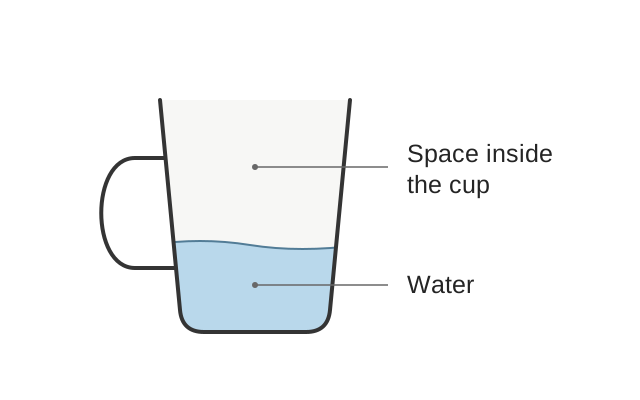
Space is the room that allows other things to exist and move. The cup below illustrates this idea: its interior provides room for water, whether the cup is full or partly filled. In this model, space provides the setting for the other four elements.
Calling these the five elements of life extends the same framework to living things. In Ayurvedic descriptions of the body, being “made of five elements” means that its structures and functions are understood through these qualities. Earth describes structures such as bones; water describes bodily fluids; fire describes transformation through digestion. This is a traditional way of describing the body's qualities and processes. A chemical analysis answers a different question: which substances the body contains.
Why Do Some Traditions Have Four Elements and Others Five?
Aristotle used earth, water, air and fire to explain the world around us. To account for the heavens, his model included another substance, aether.
The reason for this distinction was motion. In On the Heavens, he describes the earthly elements as moving naturally upward or downward, while the heavens move in circles. In his theory, that different movement called for a different kind of matter.
Other five-element models have their own reasons for using five categories. The Indian framework includes space as the room for things to exist. In wuxing, the five phases describe change through their relationships with one another; none is set apart as a special "fifth element".
What is the fifth element?
The term "fifth element" can refer to aether, akasha or spirit, depending on the tradition. Each has a different role:
| Term | Where it is used | What it means |
|---|---|---|
| Aether | Aristotle's cosmology | The substance of the heavens, with natural circular motion |
| Akasha | Indian five-element traditions, including Ayurveda | Space, which provides room for the other elements |
| Spirit | Some modern Western spiritual accounts | A life force connecting and animating the other elements |
In Melani Schweder's account, spirit is also called ether. The name "ether" also appears in English discussions of aether and akasha, but the shared name does not make the concepts interchangeable. Their different roles are outlined in the table above.
Is there one original set of five elements?
There is no single original set of five elements shared by the traditions discussed here. Wuxing's five phases, the Indian five great elements and Aristotle's heavenly substance belong to different explanations of nature. Asking for the "original five" therefore requires naming the tradition whose early teachings you mean.
Element Symbols and Diagrams
The element lists we've discussed also appear as pictures: triangle signs on an alchemical chart, or five names linked by arrows in a wuxing diagram. The shapes identify elements; the arrows show relationships between them.
Western alchemical symbols
These four triangle signs are common Western alchemical symbols for fire, water, air and earth.
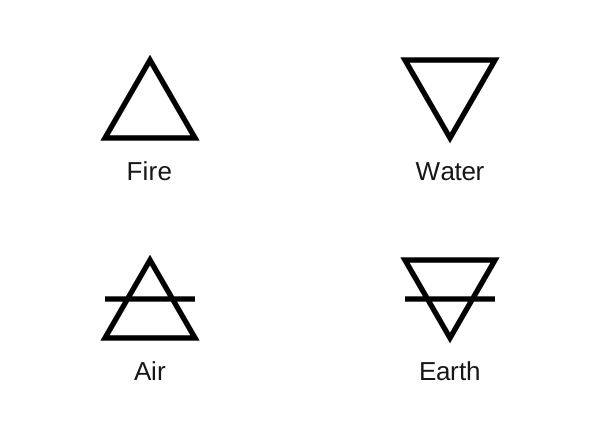


Fire and air point upward; water and earth point downward. The horizontal line distinguishes air from fire and earth from water.
Modern representations of spirit allow more choice. For example, Melani Schweder suggests a mandala or spiral and leaves the choice open to personal interpretation. Her examples show how a modern author may represent spirit; other accounts can choose different symbols.
Reading a wuxing diagram
Wuxing diagrams place the five phases around a circle and connect them with arrows. In the example below, each phase has an English name alongside its Chinese character: 木 for wood, 火 for fire, 土 for earth, 金 for metal and 水 for water.
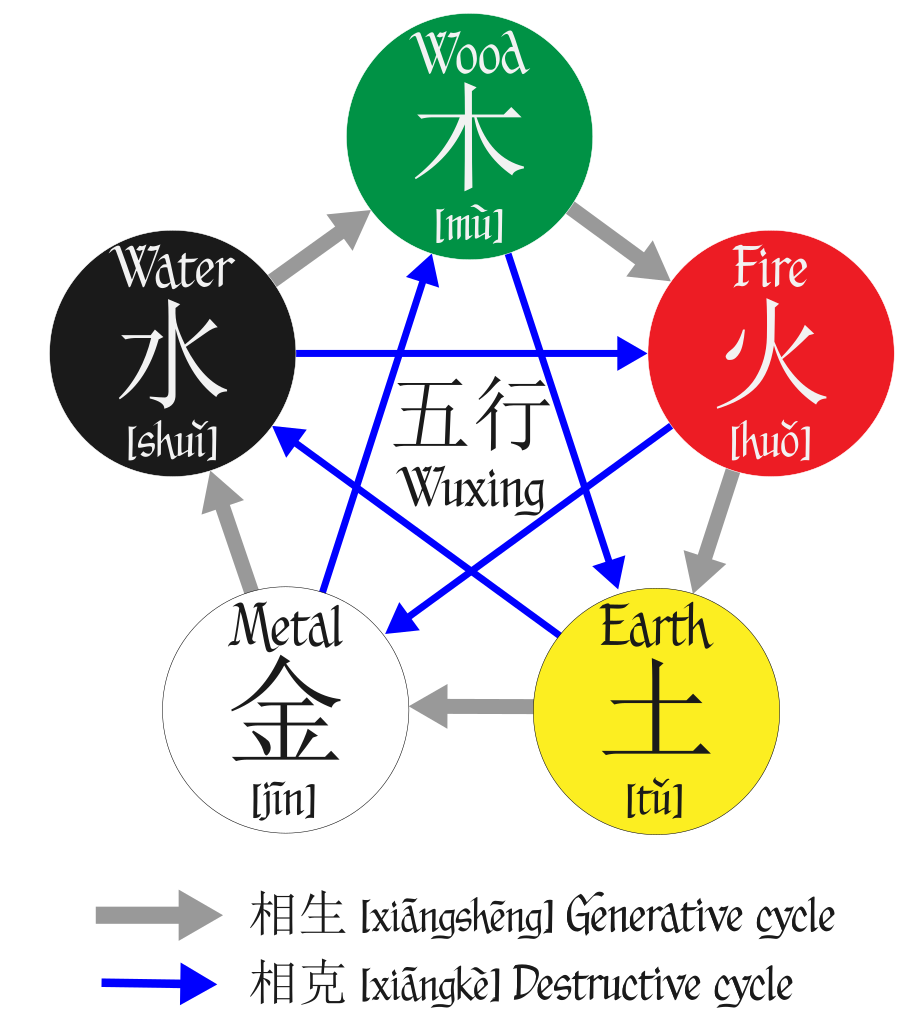

The grey outer arrow from water to wood shows the generating cycle, in which one phase supports another. The blue inner arrow from water to fire illustrates the controlling cycle, in which one phase restrains another.
A Japanese example: the gorinto
The five elements also take a three-dimensional form in the gorinto, a type of Japanese Buddhist pagoda. Its stacked shapes each represent an element, as the example described by Yawata City explains.
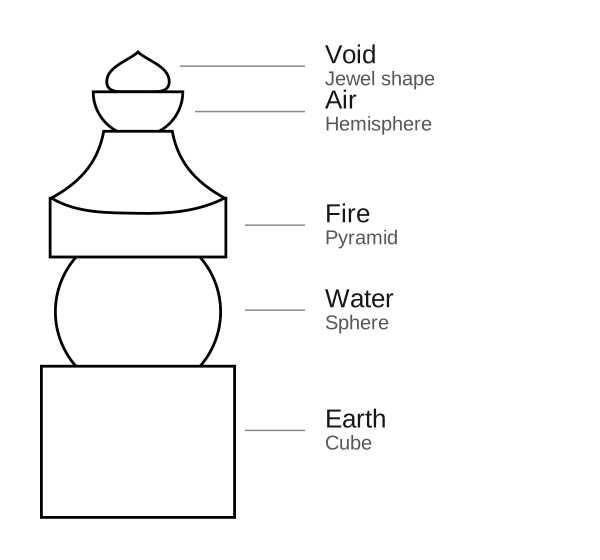

Reading upward from the base, the cube represents earth, the sphere water, the pyramid fire, the hemisphere (half a sphere) air, and the jewel shape void. Here, the position and shape of each part identify its element.
The 5 elements take their meaning from the tradition in which they appear. Wuxing describes change through relationships between phases, while Ayurveda uses elemental qualities to explain nature and the body. Western accounts include both classical ideas about what the world is made of and modern spiritual interpretations. These different purposes help explain why the lists and symbols vary, even when they share familiar names such as earth, water or fire.
Written by
Richie Shi
I’m Richie. I help foreigners solve problems related to China. Feel free to reach out directly.
Recommended articles
All guidesHow to Book Hotels in China as a Foreigner: 2026 GuideCompare Trip.com, Agoda, Booking.com, Expedia and local hotel apps, then avoid issues with foreign guest policies, passports, credit cards and deposits.Richie Shi China SIM Card, eSIM or Roaming? 2026 Guide for ForeignersCompare China SIM cards, eSIMs, and roaming in 2026, with airport vs city buying tips, carrier choices, passport rules, and VPN advice.Richie Shi
 How to Book China High-Speed Rail Tickets in 2026Book China high-speed rail tickets as a foreigner with passport tips, Trip.com vs 12306, 15-day sales, reservations, payment options, and boarding steps.Richie Shi
China SIM Card, eSIM or Roaming? 2026 Guide for ForeignersCompare China SIM cards, eSIMs, and roaming in 2026, with airport vs city buying tips, carrier choices, passport rules, and VPN advice.Richie ShiHow to Book China High-Speed Rail Tickets in 2026Book China high-speed rail tickets as a foreigner with passport tips, Trip.com vs 12306, 15-day sales, reservations, payment options, and boarding steps.Richie Shi