

Healthcare in China for Foreigners: Hospitals Guide
A practical guide for foreigners on how to visit hospitals in China, including hospital types, process, costs, language support, and payment tips

–10 min read
Healthcare in China for Foreigners: Hospitals Guide
A practical guide for foreigners on how to visit hospitals in China, including hospital types, process, costs, language support, and payment tips
–10 min read
If it’s your first time seeking healthcare in China, feeling nervous is completely normal. For most people, the stress doesn’t come from whether the doctor is competent—it comes from not knowing what to do next or where to go.
The good news is that this uncertainty can be reduced in advance. As long as you understand the types of hospitals, language support, consultation process, and payment methods, the entire experience becomes much smoother.
This guide covers 8 common questions. It’s recommended to read them in order to quickly get familiar with how the healthcare system works in China.
1. After getting sick, should I go to a public hospital, an international department, or an international hospital?
This choice directly affects your cost, waiting experience, communication quality, and overall stress during the visit.
First, understand the real differences between these four types of institutions before deciding:
- Public hospitals (classified into three tiers based on medical capability. “Class 3A hospitals” are the highest-rated within Tier 3, and can be considered the top level in China’s healthcare system)
- Pros: Strong specialty care for complex conditions, comprehensive departments, generally lower official pricing.
- Trade-offs: Crowded, short consultation times, fast-paced, primarily Chinese-speaking environment.
- International departments within large public hospitals
- Pros: More foreigner-friendly communication and guidance, while still connected to top public hospital specialists.
- Trade-offs: Higher fees than standard public outpatient services.
- International hospitals (private healthcare institutions)
- Pros: English support, better privacy, more seamless end-to-end experience, and more likely to support direct billing with insurance.
- Trade-offs: Usually the highest out-of-pocket cost.
- Local private clinics/hospitals
- Pros: Convenient, fast, suitable for common minor conditions.
- Trade-offs: Quality can vary significantly between providers.
After comparing these options, here are some practical recommendations:
- Minor conditions + Chinese-speaking support: Public hospitals are usually efficient.
- If you value stable communication and a more predictable process: Prioritize international departments or international hospitals.
- For chronic conditions, surgery, maternity care, pediatrics, oncology, etc.: Prioritize continuity of care and communication quality—don’t focus only on the initial consultation cost.
2. If I don’t speak Chinese, can I still go to the hospital on my own?
This mainly applies to public hospitals in China. International departments and international hospitals usually offer better language support and guidance.
Yes, you can—but without additional Chinese support, it’s often more challenging than expected.
For most foreigners, the main difficulty isn’t talking to the doctor. It’s navigating the entire process on your own without guidance. Different steps may take place in different locations, and if you don’t speak Chinese, it can be quite difficult to manage.
To minimize risks, it’s usually best to prepare as follows:
- Bring a Chinese-speaking friend, colleague, or a professional medical interpreter.
- Prepare a brief description of your symptoms in both Chinese and English.
- Have your passport, medical history, allergy information, and current medication list ready.
- Bring past test results, imaging reports, and records from other hospitals or clinics. Medical data is often not shared across institutions, so having your own copies can help avoid repeated tests and explanations.
In many cases, having a reliable companion can turn a “chaotic day” into a “manageable one.”
3. What is the process like for a first visit to a hospital in China?
In China, you can usually go directly to a specialist department, unlike in many Western systems where a referral from a general practitioner is often required.
In public hospitals, the typical process usually follows this sequence:
- The following describes the standard outpatient process in public hospitals. International departments generally follow a similar structure, but with one key difference: instead of navigating each step on your own, guidance services and process integration help connect registration, check-in, payment, and follow-up into a smoother experience.
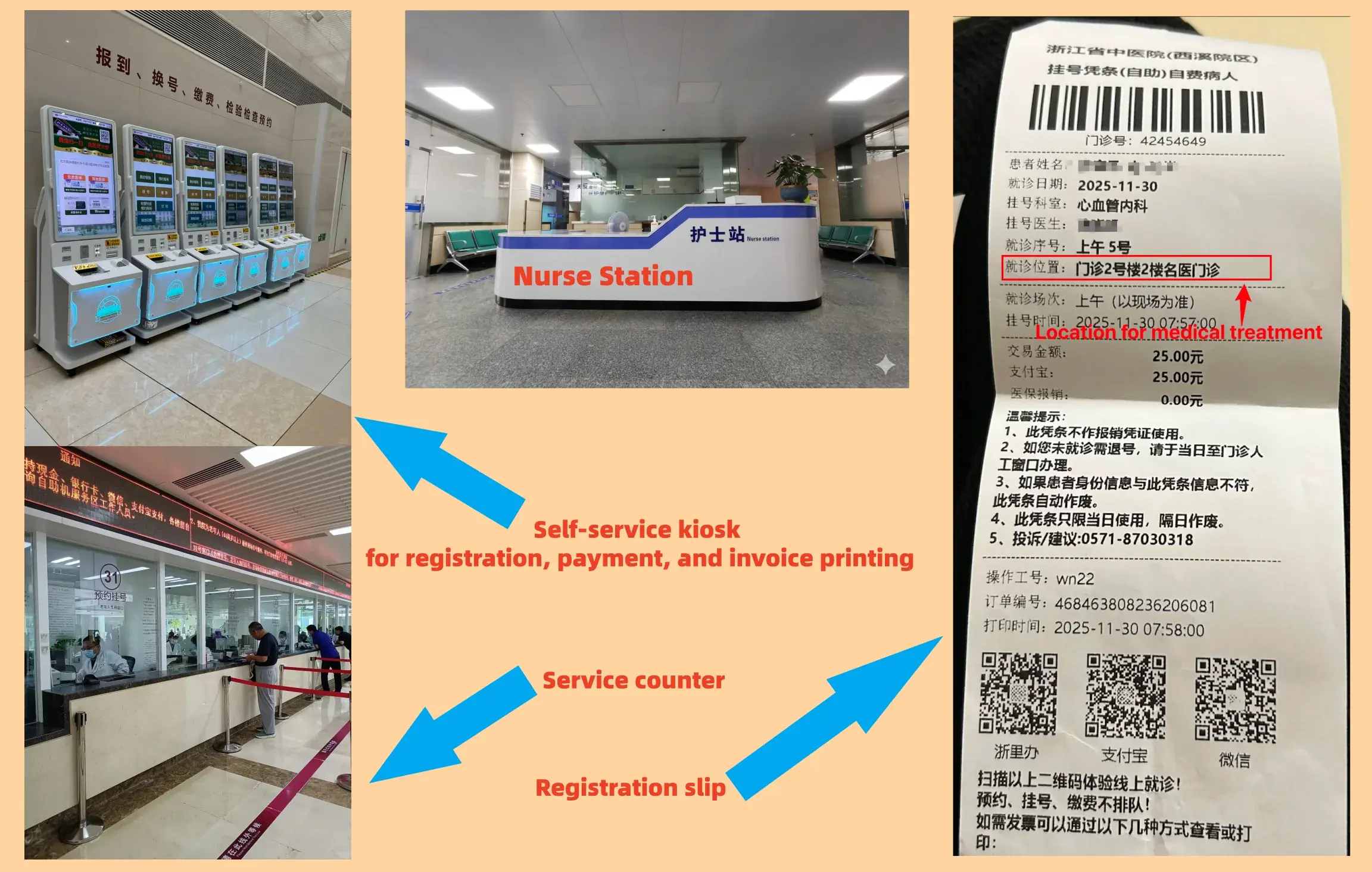
- If you’re unsure what to do, go to the nurse station—staff can help guide you.
- Choose a hospital.
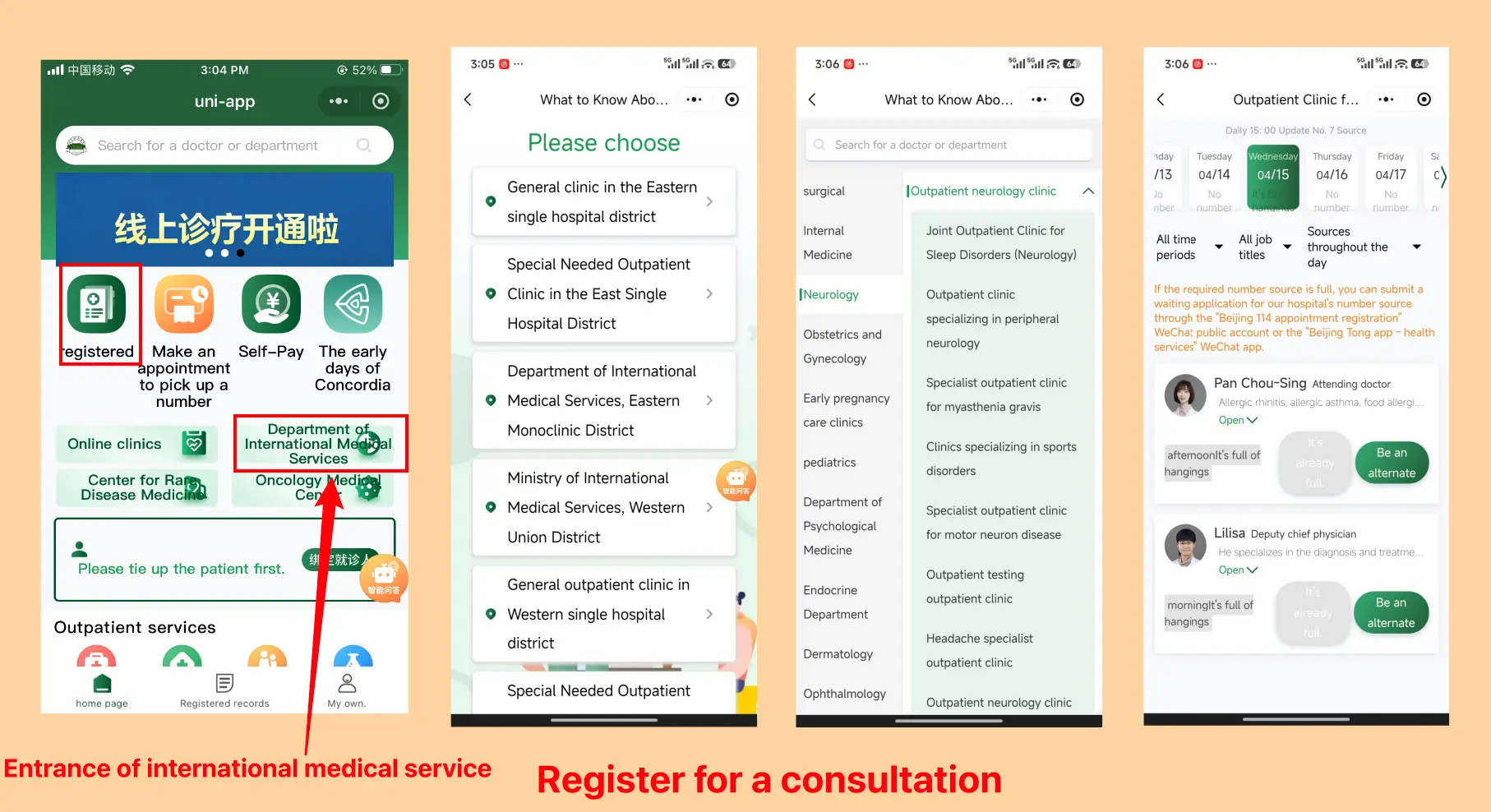
- Use an app/WeChat mini program, or go to a self-service kiosk or registration counter at the hospital. Select a department and doctor, then register using your passport and pay the registration fee.
- Appointment slots at public hospitals can be limited, so it’s recommended to book about a week in advance.
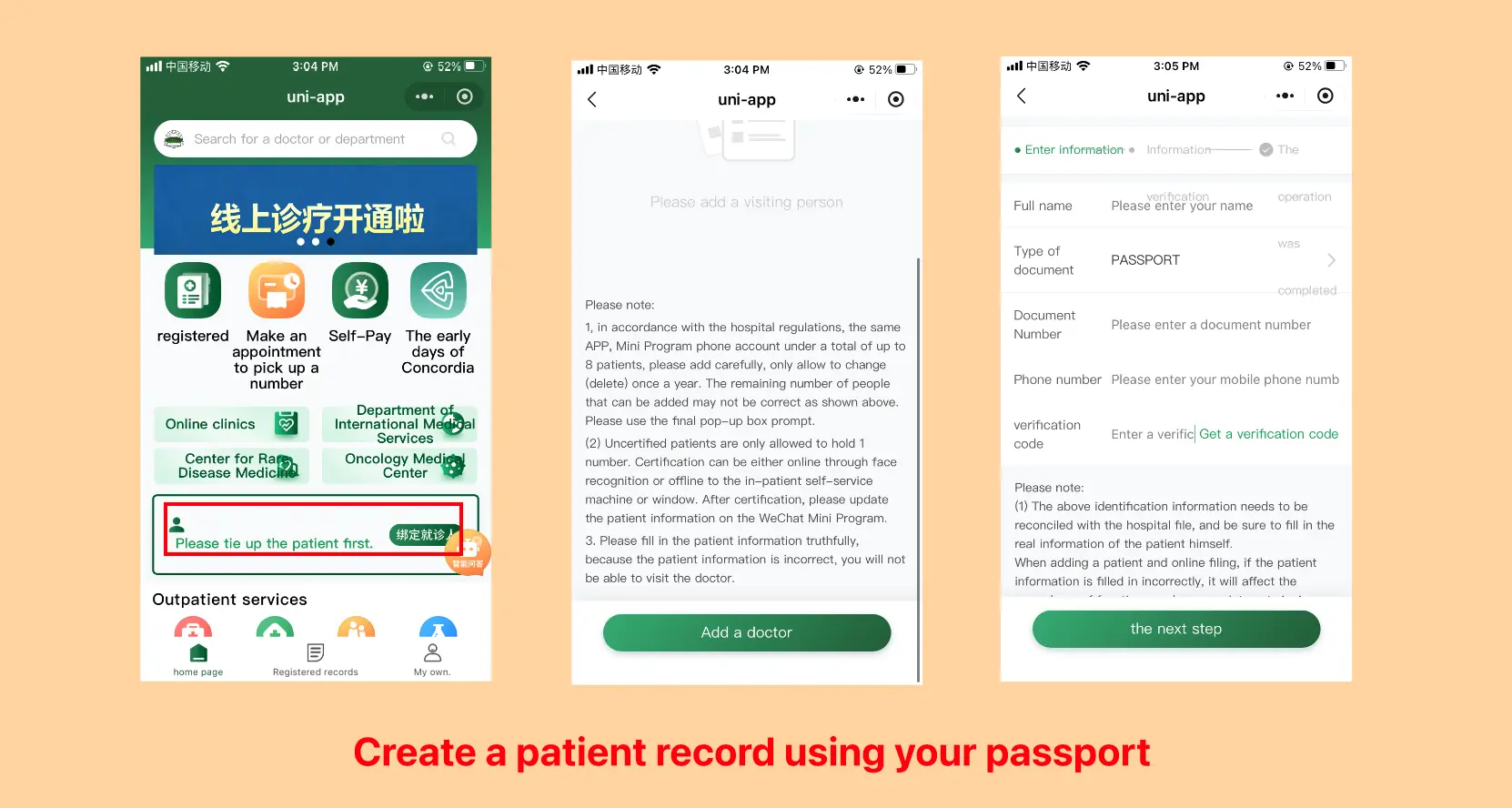
- For your first visit, you’ll usually need to complete a “registration record” (creating a patient file at that hospital). This is required before booking and proceeding with other steps. Some hospitals do not fully support first-time passport registration online. If online registration fails, the usual solution is to go to the hospital early and complete it at a manual counter before booking.
- Online registration and related steps require receiving SMS verification codes. Foreign phone numbers may not always work, so it’s best to test in advance. If needed, prepare a Chinese phone number. You can refer to this guide: 2026 Full Guide - How Foreigners Get a Chinese SIM Card – Best Plans, eSIM, Airport vs City, Working VPNs
- After registration, you’ll receive a registration slip indicating which building, floor, and department to go to.
If you registered online, you may need to print your registration slip at a self-service machine upon arrival.
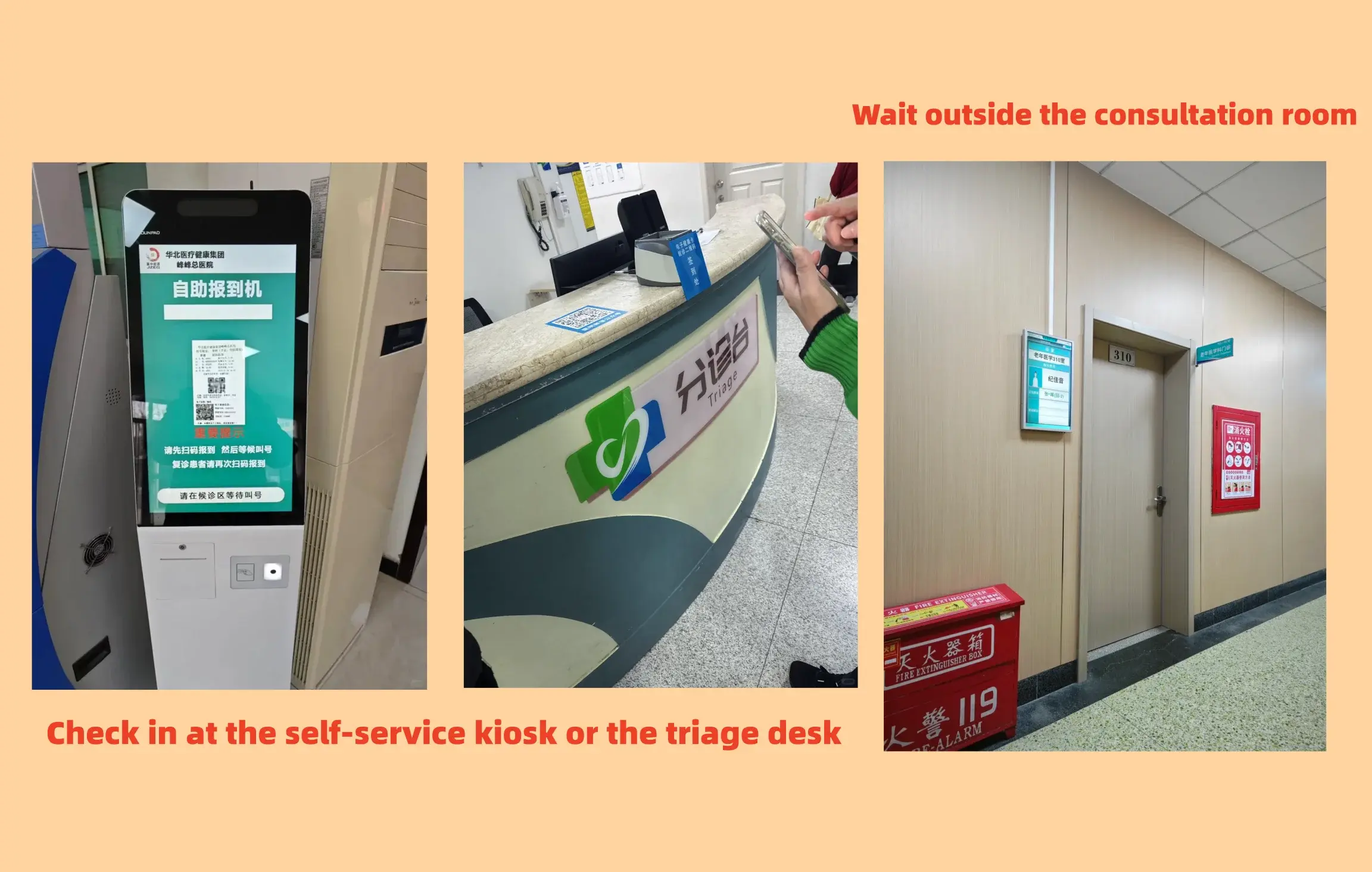
- Go to the department and check in either via a self-service check-in machine (scan the barcode) or at the triage desk.
- After check-in, wait outside the assigned consultation room. Screens usually display the current queue.
- When your number is called, enter the room and consult with the doctor. The doctor may order tests based on your condition.
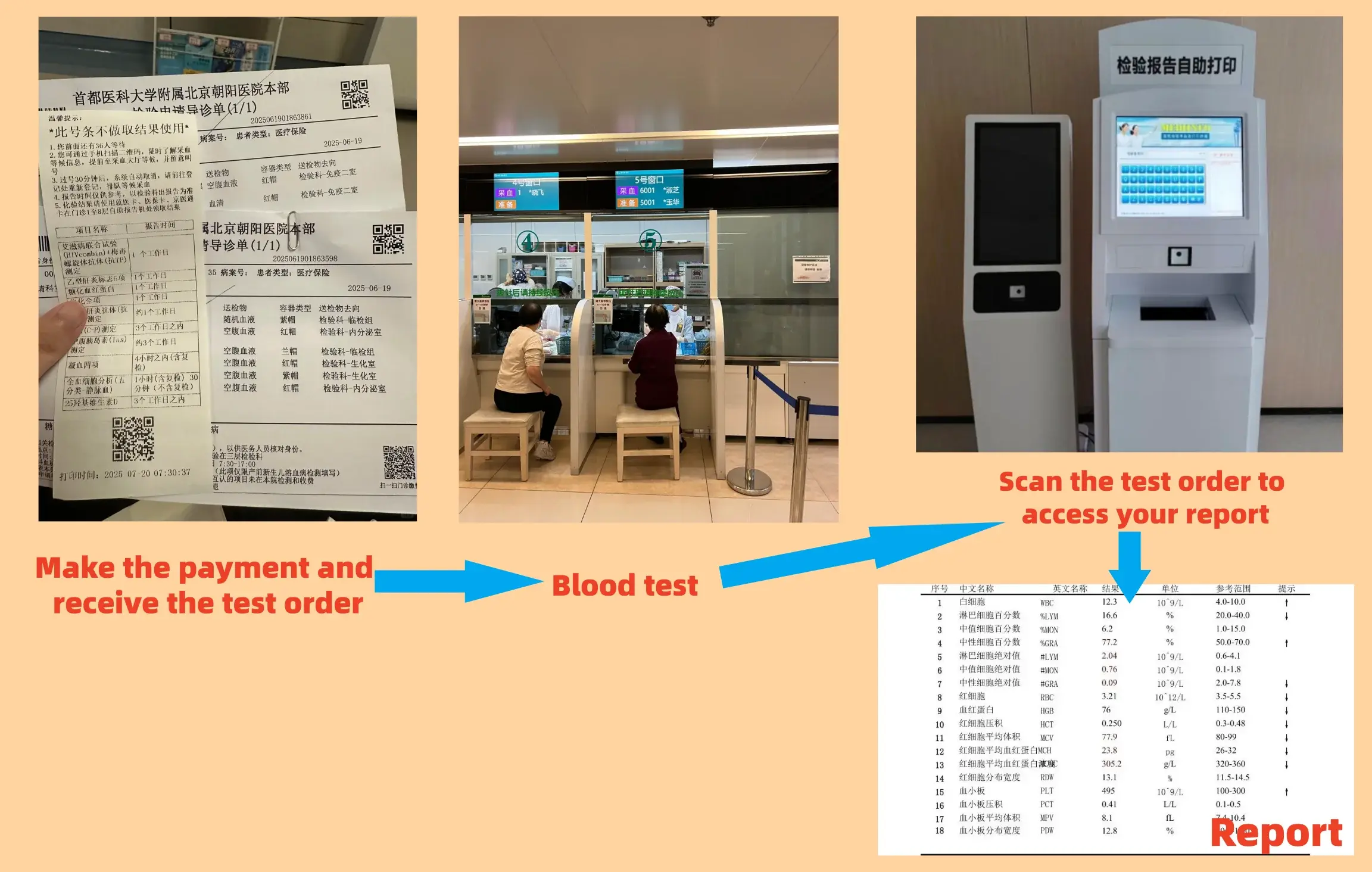
- Pay for the tests via the app/WeChat mini program, self-service kiosk, or counter. You will receive test forms.
- Go to the designated testing area and wait to be called. After completing the tests, you can usually retrieve results via the app/mini program or print them at a hospital machine.
- Many routine test results are available the same day. If not, you’ll need to return and register again once results are ready.
- Payment kiosks and result-printing machines may be separate—pay attention to signage.
- After receiving results, return to the department and check in again via a self-service machine or at the nurse station for follow-up.
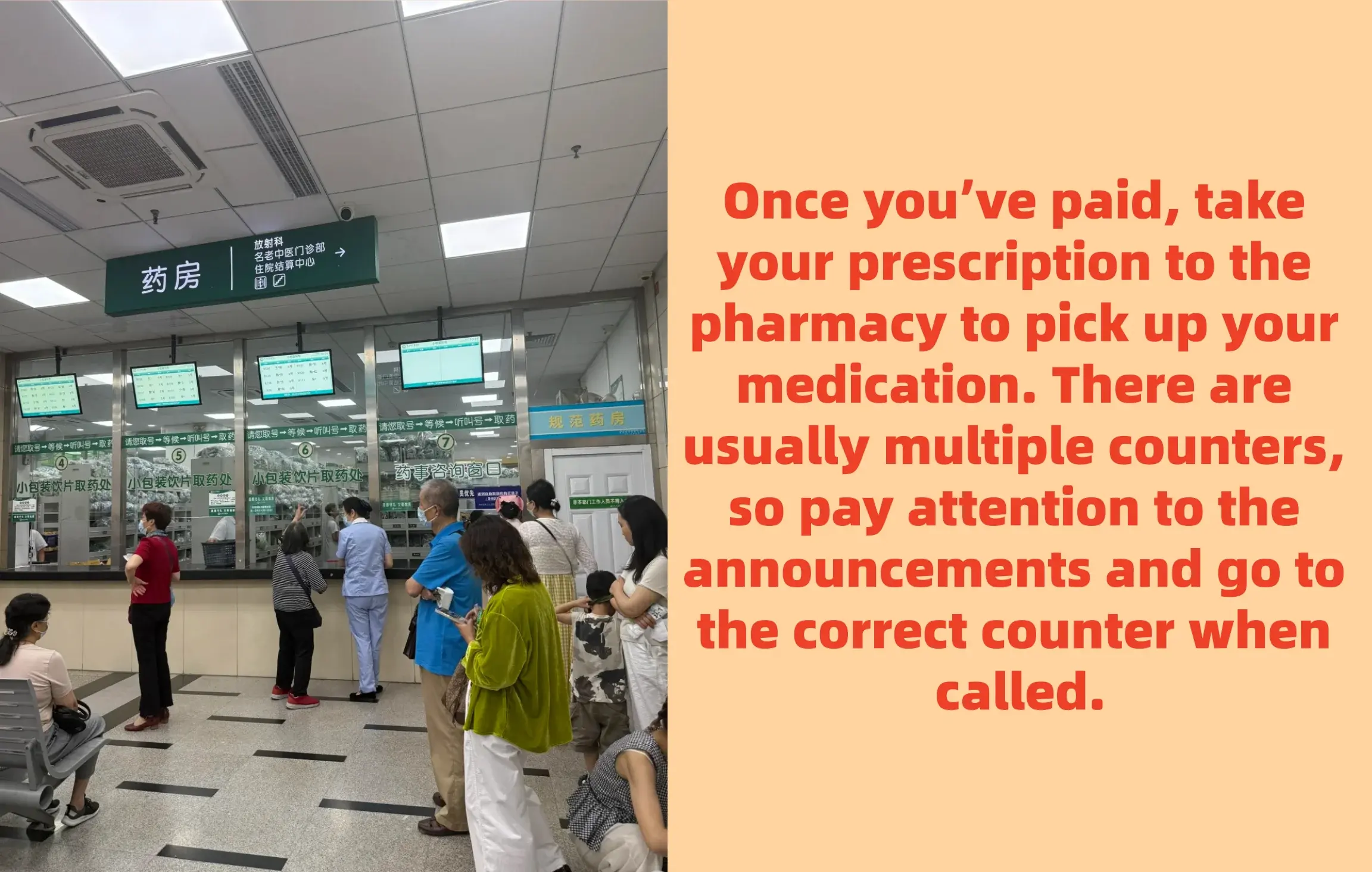
- Wait for your number again → consult with the doctor → receive a prescription → pay → queue at the pharmacy → collect medication → visit complete.
- If you need an official invoice for reimbursement, you can print it at the same self-service machine used for payment.
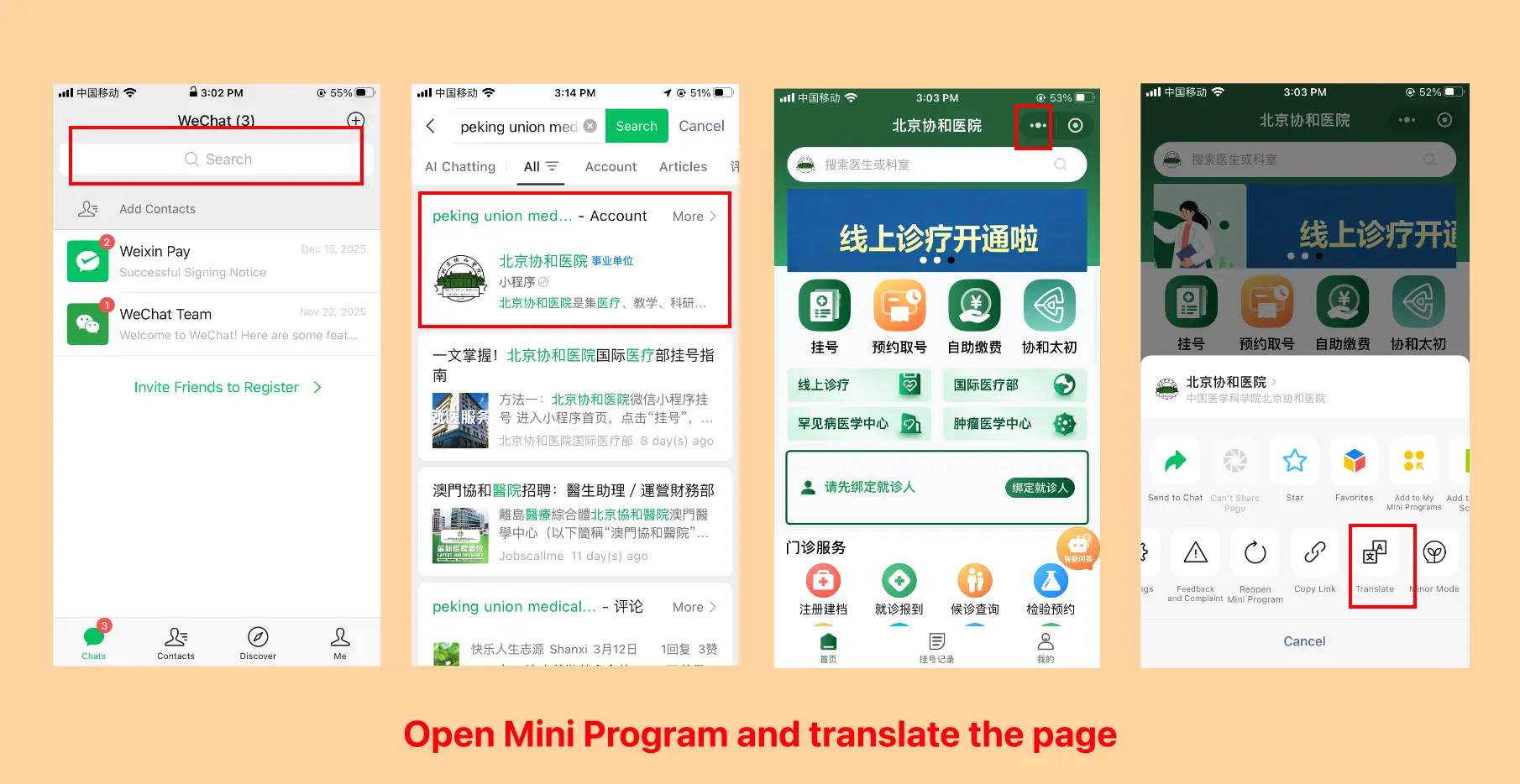
Most hospitals have their own WeChat mini programs, which are convenient to use. Below is a quick walkthrough of key steps:
WeChat is the primary messaging app in China (similar to WhatsApp or Telegram). It also supports mobile payments and integrates mini programs, which hospitals use to provide services. For how to register and use WeChat Pay, see: How Foreigners Can Sign Up for WeChat Pay (WeXin Pay) and Use It in China
-
Online registration
-
On-site registration
-
Triage and waiting
-
Medical tests
-
Collect medication
If you choose an international hospital, the process is usually closer to what many people are familiar with in Western healthcare systems:
- Book an appointment online or by phone in advance.
- Upon arrival, complete identity and insurance verification at a single front desk.
- After consultation, handle payment at a centralized billing desk (direct billing may be available depending on insurance).
- Testing and pharmacy steps are typically better guided and more streamlined.
4. Are hospitals in China very efficient?
In many cases, yes. Consultation, testing, follow-up, and getting medication can often be completed in one go, and many common issues are resolved within a single day.
However, efficiency doesn’t always mean a relaxed experience. With a high volume of patients, consultation time with doctors is often limited, communication can feel rushed, and the overall process may feel fast-paced and somewhat stressful.
So the key is not just “how fast it is,” but choosing based on your priorities:
- If you want to quickly handle a straightforward issue, public hospitals are usually very efficient.
- If you prefer more thorough communication and a smoother experience, international channels are generally more comfortable.
5. How should I prepare for costs and insurance?
This is often the most stressful part, but spending a few minutes checking in advance can save you a lot of confusion on the spot.
Public hospitals
International departments in public hospitals tend to support foreign bank cards better. China’s public medical insurance is generally not applicable, while some hospitals support direct billing with commercial insurance.
If you want to use WeChat Pay or Alipay, you can refer to the following guides:
-
Payment methods
- Alipay and WeChat Pay are the most common
- Some counters/self-service machines support bank cards (mainly UnionPay; foreign cards are not consistently supported, so don’t rely on this as your only option)
- A few counters accept cash
-
Insurance
- China public medical insurance: can be settled directly (if you are enrolled)
- Commercial insurance:
- Confirm in advance whether your insurance covers the hospital
- Direct billing is usually not supported
- Typically pay first, then claim reimbursement
International hospitals
-
Payment methods
- Alipay, WeChat Pay
- Credit cards / bank cards (international cards are widely accepted)
-
Commercial insurance
- Confirm in advance whether your insurance covers the hospital
- Direct billing is commonly supported
6. If it’s an emergency, what should I do first?
First, remember the most important number: 120 (China’s emergency hotline, equivalent to 911/112 in many Western countries).
Try to prepare key information in advance:
- Your address(include clear landmarks to help with location)
- Current symptoms
- Allergy history, chronic conditions, and medications you are taking
- Location of your passport/ID
- Emergency contact
If you’re staying in China short-term, it’s a good idea to prepare ahead:
- Save one nearby public hospital emergency department
- Save the 24-hour contact number of an international hospital
This allows you to make quick decisions depending on the situation:
- For critical conditions: prioritize public hospital emergency services
- For smoother communication: choose an international hospital
7. What are the typical costs for different types of hospitals?
-
Public hospitals
- Registration fee
- General outpatient: ¥10 – ¥50
- Specialist consultation: ¥50 – ¥300
- Common tests
- Blood test: ¥50 – ¥200
- CT scan: ¥300 – ¥800
- Registration fee
-
International departments in public hospitals
- Registration fee: ¥300 – ¥1000+
- Common tests
- Blood test: ¥100 – ¥500
- CT scan: ¥500 – ¥1500
-
International hospitals
- Consultation fee: ¥1000 – ¥3000+
- Common tests
- Blood test: ¥300 – ¥1500
- CT scan: ¥1500 – ¥4000
8. Common Class 3A Public Hospitals and International Hospitals in Major Chinese Cities
Beijing
Public Hospitals
- 北京协和医院 (Peking Union Medical College Hospital)
- 北京大学第一医院 (Peking University First Hospital)
- 北京大学第三医院 (Peking University Third Hospital)
- 中日友好医院 (China-Japan Friendship Hospital)
International Hospitals
- 北京和睦家医院 (Beijing United Family Hospital)
- 北京新世纪医院 (Beijing New Century Hospital)
- 北京大学国际医院 (Peking University International Hospital)
Shanghai
Public Hospitals
- 复旦大学附属中山医院 (Zhongshan Hospital,Fudan University)
- 复旦大学附属华山医院 (Huashan Hospital,Fudan University)
- 上海交通大学医学院附属瑞金医院 (Ruijin Hospital,Shanghai Jiao Tong University)
- 上海交通大学医学院附属仁济医院 (Renji Hospital,Shanghai Jiao Tong University)
International Hospitals
- 上海和睦家医院 (Shanghai United Family Hospital)
- 上海嘉会国际医院 (Jiahui International Hospital)
Guangzhou
Public Hospitals
- 中山大学附属第一医院 (First Affiliated Hospital of Sun Yat-sen University)
- 南方医科大学南方医院 (Nanfang Hospital,Southern Medical University)
- 广州医科大学附属第一医院 (First Affiliated Hospital of Guangzhou Medical University)
International Hospitals
- 广州和睦家医院 (Guangzhou United Family Hospital)
Conclusion: Turn Medical Visits from “On-the-Spot Stress” into “Prepared Action”
You don’t need to understand the entire system all at once—just focus on the key steps in the process.
Once these are clear in advance, you’ll feel much more in control when you actually need to seek medical care.
FAQ
Do hospitals in China really not support English?
Not necessarily. Many international hospitals and international departments in large public hospitals provide English support, but the level varies by city and institution.
Are public hospitals worse than international hospitals?
No. Public hospitals often have advantages in specialty care and pricing. The main differences are usually in communication experience and process convenience, not in core medical capability.
Can I still see a doctor without insurance?
Yes. Paying out of pocket is very common. The key is to assess your budget in advance.
What is the most practical payment setup?
Insurance + Alipay/WeChat Pay + bank card + some cash as backup.
Written by
Richie Shi
I’m Richie. I help foreigners solve problems related to China. Feel free to reach out directly.
Recommended articles
All guidesHow to Book Hotels in China as a Foreigner: 2026 GuideCompare Trip.com, Agoda, Booking.com, Expedia and local hotel apps, then avoid issues with foreign guest policies, passports, credit cards and deposits.Richie Shi China SIM Card, eSIM or Roaming? 2026 Guide for ForeignersCompare China SIM cards, eSIMs, and roaming in 2026, with airport vs city buying tips, carrier choices, passport rules, and VPN advice.Richie Shi
 How to Book China High-Speed Rail Tickets in 2026Book China high-speed rail tickets as a foreigner with passport tips, Trip.com vs 12306, 15-day sales, reservations, payment options, and boarding steps.Richie Shi
China SIM Card, eSIM or Roaming? 2026 Guide for ForeignersCompare China SIM cards, eSIMs, and roaming in 2026, with airport vs city buying tips, carrier choices, passport rules, and VPN advice.Richie ShiHow to Book China High-Speed Rail Tickets in 2026Book China high-speed rail tickets as a foreigner with passport tips, Trip.com vs 12306, 15-day sales, reservations, payment options, and boarding steps.Richie Shi